MHD Vehcile Electrification
Supporting the Largest Deployment of Medium- and Heavy-Duty Electric Vehicles in the U.S. Read more →
Supporting the Largest Deployment of Medium- and Heavy-Duty Electric Vehicles in the U.S. Read more →

Physics-informed Machine Learning and its Applications in Power Systems. Read more →

Integration of Passenger Electric Vehicles into Power Distribution Systems.Read more →
Machine Learning-Driven Algorithmic Trading: Millions Earned in U.S. Electricity Markets. Read more →
I led the development of the ChargeOPT platform, an advanced decision-support and optimization platform designed to accelerate the electrification of medium- and heavy-duty vehicle fleets. ChargeOPT integrates vehicle duty cycles, charging infrastructure, electricity rates, grid constraints, fleet operating requirements, and technology costs to jointly optimize vehicle adoption, charger deployment, and charging operations. By combining data analytics, power system modeling, and advanced optimization, the platform helps fleet operators, electric utilities, charging providers, and public agencies evaluate electrification pathways, reduce infrastructure and operating costs, manage charging demand, and develop practical strategies for large-scale transportation electrification.
The ChargeOPT platform can be accessed at https://amptrans.net/#solutions.ChargeOPT has advanced beyond academic research to support large-scale real-world deployment and policy implementation. The platform was selected by the South Coast Air Quality Management District (SCAQMD) to support a $500 million initiative focused on accelerating the deployment of charging infrastructure and the adoption of heavy-duty electric vehicles across Southern California. Through this effort, ChargeOPT provides analytical and planning capabilities to identify cost-effective charging investments, evaluate fleet electrification strategies, assess impacts on the electric grid, and support coordinated transportation and energy infrastructure planning. This application demonstrates how university-developed optimization and decision-support technologies can directly inform major public investments and help accelerate the transition to zero-emission freight transportation.
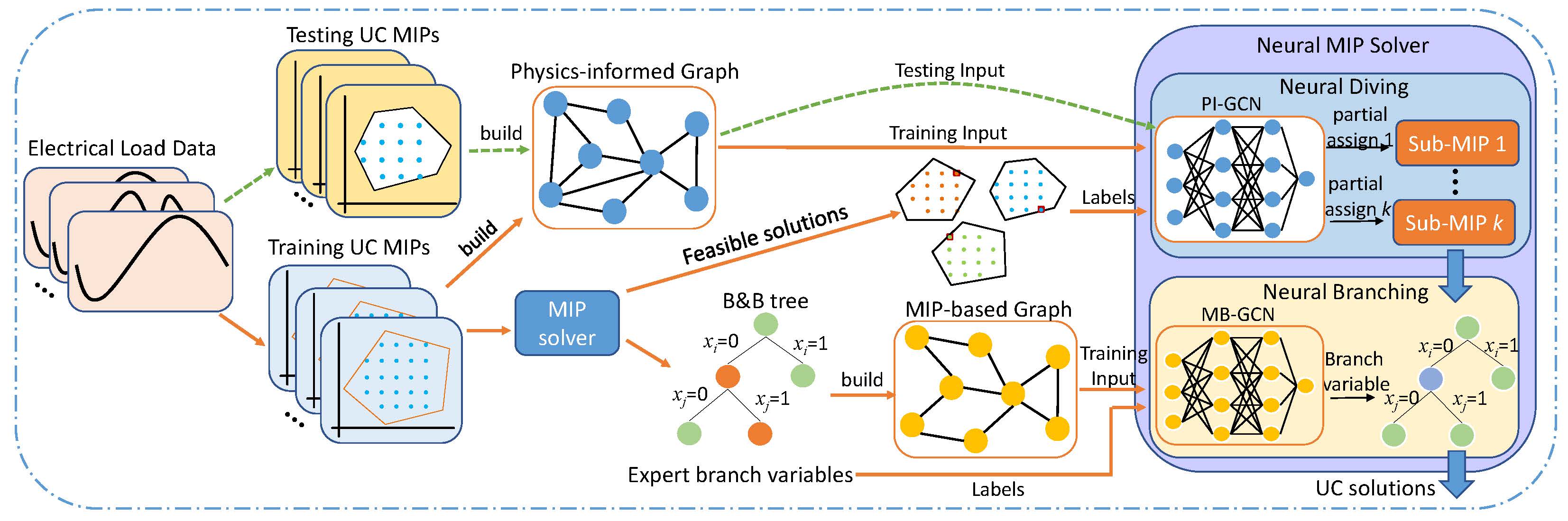
For additional information on the real-world deployment and impact of ChargeOPT, please see SCAQMD's feature article, "New ChargeOPT Tool Helps Map the Path to Electric Trucks."Prof. Nanpeng Yu has developed a portfolio of physics-informed and data-driven machine learning technologies that address critical computational and operational challenges in electric power systems. These include a patented phase-identification technology that uses smart-meter and grid data to identify and correct phase-connectivity errors; physics-informed graph learning and neural-diving algorithms that accelerate large-scale unit commitment and electricity-market optimization; and deep reinforcement learning algorithms for Volt-VAR control (VVC) that coordinate voltage-regulating devices and smart inverters while respecting power-system operating constraints. Together, these advances integrate physical knowledge with modern AI to improve the accuracy, scalability, safety, and computational efficiency of grid monitoring, optimization, and control.
These research advances have progressed well beyond academic demonstrations. Prof. Yu's patented phase-identification technology (U.S. Patent No. 11,740,274) has been deployed by major utilities, including Southern California Edison and Pacific Gas & Electric, where it has helped identify and correct thousands of grid topology errors, improving distribution-system reliability and safety. His physics-informed unit-commitment technology is being incorporated into commercial electricity-market software through collaborations with companies including GE and Hitachi, demonstrating a pathway for AI to accelerate computationally intensive market operations. His data-driven Volt-VAR control technologies have also been validated using real-world smart-meter data and are designed for integration into advanced distribution-management systems, supporting lower network losses, improved voltage quality, and more reliable operation of increasingly renewable-rich electric grids.
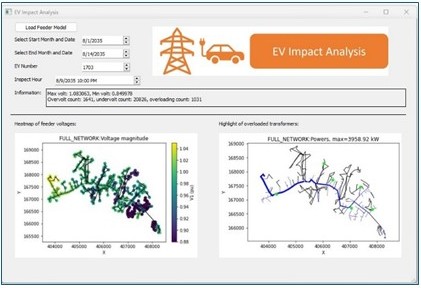
I led the development of an integrated, data-driven software platform for accelerating electric vehicle (EV) integration into electric distribution systems in collaboration with Exelon and its utility partners. The platform consists of three interconnected software modules: EV Adoption Prediction, which uses data-driven diffusion models to forecast EV adoption at multiple geographic levels; Charging Load Prediction, which applies machine learning to forecast EV charging demand; and Distribution Grid Impact Assessment, which integrates EV adoption and charging forecasts with feeder-level power-flow analysis to identify potential voltage violations, transformer overloads, and infrastructure upgrade needs. The user-friendly software was developed and delivered to Exelon, one of the largest electric utility companies in the United States, and its utility partners to support data-driven distribution planning for large-scale transportation electrification.
Additional information is available from UCR ECE: ECE Professor's Team Received U.S. DOE's Digitizing Utilities PrizeThe project achieved significant real-world impact and was selected by the U.S. Department of Energy (DOE) Office of Electricity as the Grand Prize Winner of the inaugural American-Made Digitizing Utilities Prize. Competing against dozens of teams nationwide, our UCR-led Electrify USA team received a total of $300,000 in prize awards for successfully translating advanced machine learning, power system modeling, and data analytics into practical utility software. The technology enables utilities to move from reactive infrastructure upgrades toward proactive, data-driven planning by forecasting where and when EV adoption and charging demand will emerge and assessing their impacts at the distribution-feeder level. The resulting capabilities can support long-term infrastructure planning, day-ahead operations, demand response, market participation, and more reliable and cost-effective integration of rapidly growing EV loads.
Additional information is available from the U.S. Department of Energy: Energy Department's American-Made Digitizing Utilities Prize Awards $425,000 to Phase 2 Winners.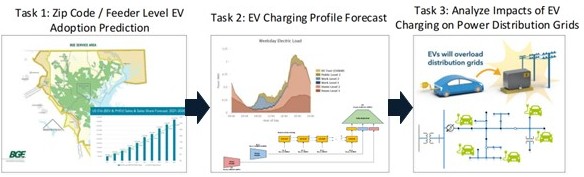
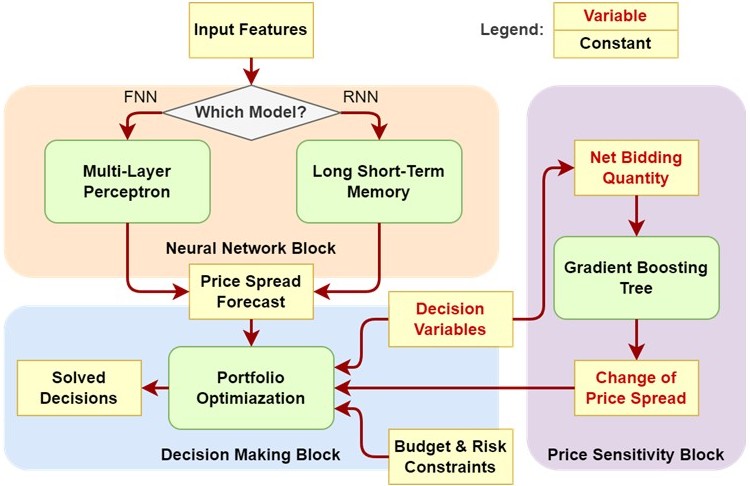
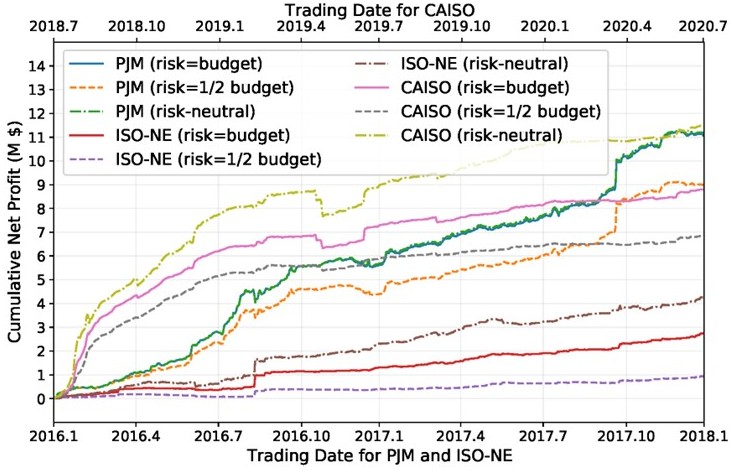
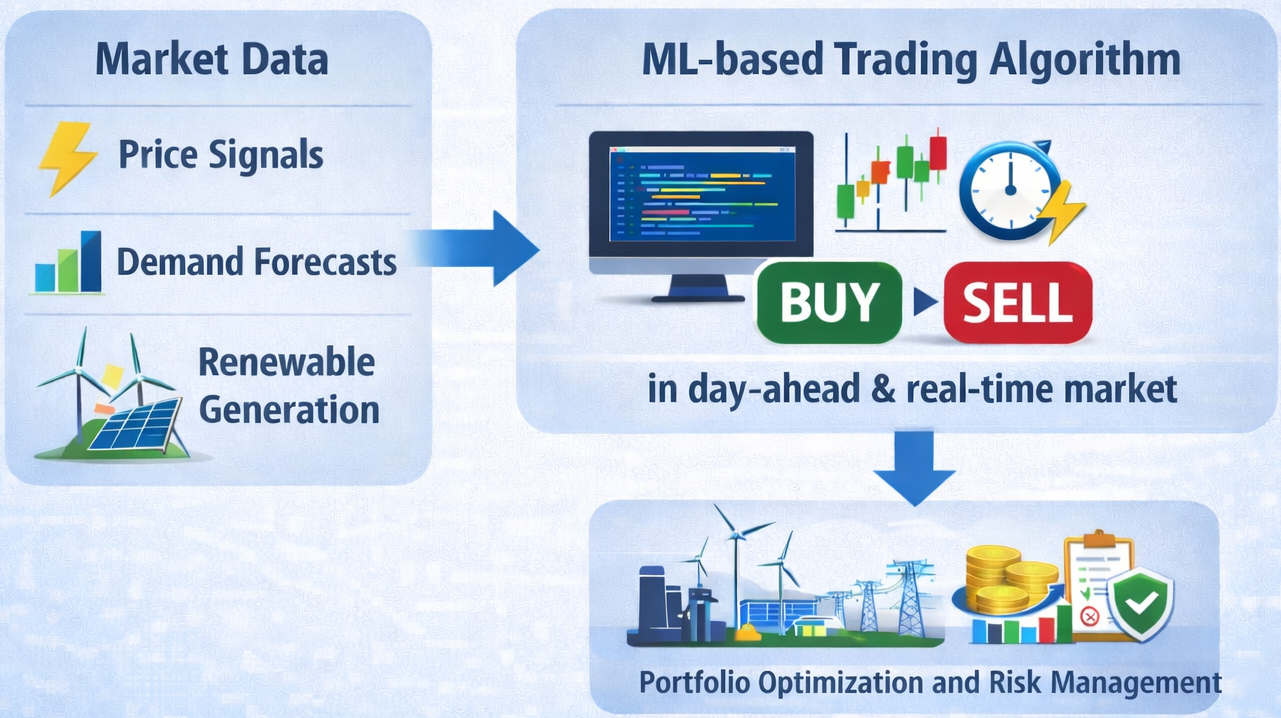
Our research has developed machine learning and optimization-based algorithmic trading strategies for virtual bidding in U.S. wholesale electricity markets. The work combines electricity price-spread forecasting, risk-constrained portfolio optimization, and market-impact modeling to identify profitable virtual transactions while explicitly accounting for congestion and the price sensitivity of large trading portfolios. The methods were evaluated using data from major U.S. electricity markets, including PJM, ISO New England, and CAISO.
Beyond academic publication, this research has achieved significant real-world technology transfer and industry adoption. The developed approaches have been adopted by dozens of wholesale power marketers and proprietary trading companies to support virtual bidding and congestion-arbitrage strategies in U.S. electricity markets. This translation from academic research to commercial market operations demonstrates the practical value of combining AI, electricity-market analytics, and advanced optimization for data-driven trading and decision making.